
Vance County Criminal Court Records
A criminal court record is the case file the court keeps after a charge, citation, warrant, summons, indictment, or other criminal process is filed or returned in court. In Vance County, the Clerk of Superior Court is the local records custodian for criminal files in District Court and Superior Court. The record can show case number, defendant name, charge list, court level, hearing history, plea, disposition, sentence, fine, cost, restitution, probation, and appeal entries.
District Court usually handles misdemeanors and infractions. Superior Court handles felony prosecutions and misdemeanor or infraction appeals from District Court. The District Attorney prosecutes cases for the State of North Carolina in Prosecutorial District 11. Sheriff or police records may explain an arrest or investigation, but the criminal court record is the court file, not the investigation file. For charge-focused detail after arrest, use the Vance County arrest records and court charges page.
Search Vance County Criminal Cases
The main online route for Vance County criminal court records is the NC eCourts Portal. Use Smart Search when searching by defendant name, record number, case number, citation number, business name, attorney information, FBI number, SO number, or booking number. Use Search Hearings when the immediate need is a criminal court date or courtroom. Portal access can require JavaScript, cookies, CAPTCHA, registration, or elevated access for some materials.
- Open the NC eCourts Portal and choose Smart Search for criminal case information.
- Search by defendant name, case number, citation number, record number, or known criminal-party identifier.
- Filter by Vance County or court location if the Portal returns statewide results.
- Open the matching case to review public docket activity, charges, hearing dates, disposition, and payment eligibility.
- Request certified copies or a certified county criminal search from the Vance Clerk of Superior Court when an official record is needed.
Certified criminal background checks are handled through the Clerk of Superior Court in the county where the search is needed. For Vance County, the certified county criminal search fee is $25. The Judicial Branch criminal background check guidance explains that a certified clerk search is different from a casual online case lookup.
The criminal background check guidance identifies certified county criminal searches and the clerk fee.
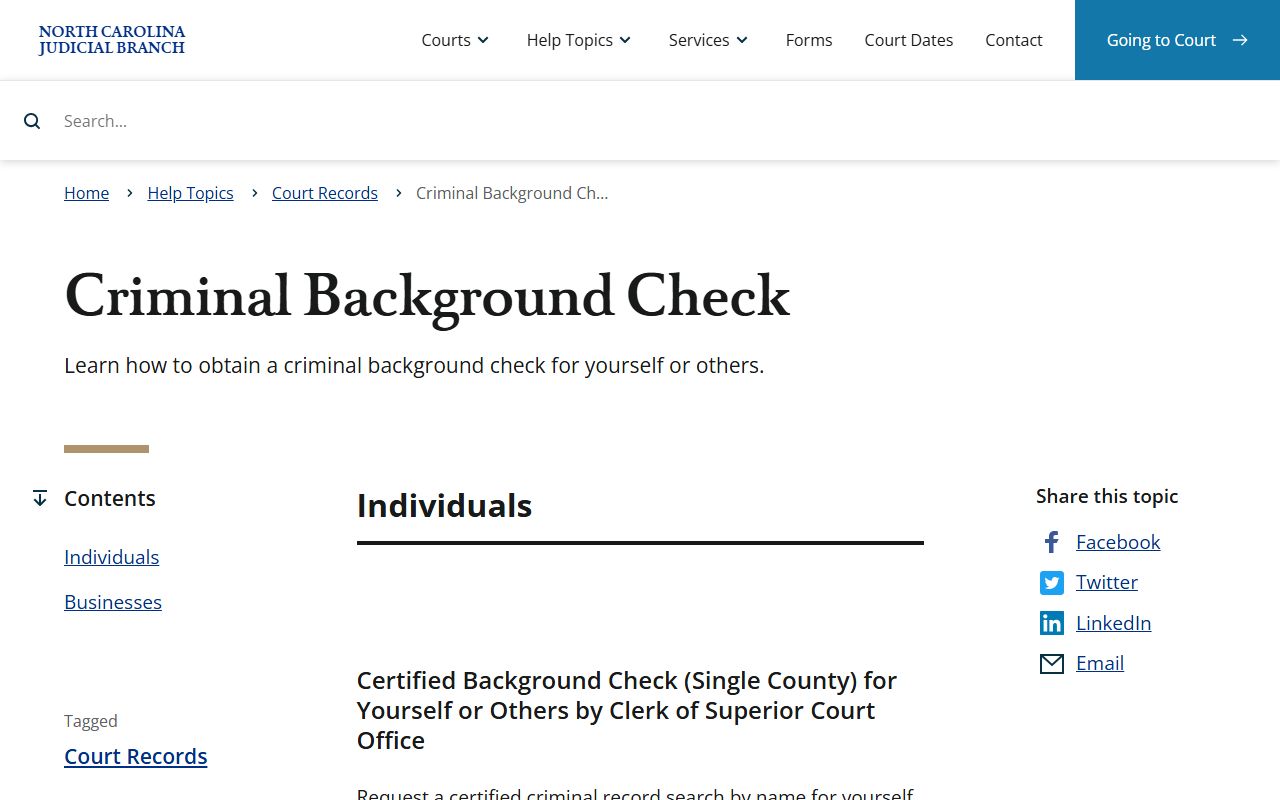
That guidance is important because a Vance County criminal court records search in the Portal is not the same as a certified clerk search.
Vance County Criminal Case Flow
A criminal case moves through the court in stages. Each stage can create a docket entry or document in the Vance County criminal court record. A case may start with a citation, warrant, criminal summons, magistrate order, indictment, or information. It may then move through first appearance, arraignment, motions, plea negotiations, trial, disposition, sentencing, costs, probation, restitution, and appeal. Felony cases can involve District Court events before moving to Superior Court.
Case flow: Charges Filed › First Appearance or Arraignment › Pretrial and Motions › Plea or Trial › Disposition › Sentencing and Costs
| Stage | What Happens |
|---|---|
| Charges Filed | The court receives a citation, warrant, summons, indictment, information, or related charging document. |
| First Appearance / Arraignment | The defendant appears, the charge is addressed, counsel issues may be raised, and next dates are set. |
| Pretrial / Motions | Parties file requests, seek continuances, address evidence issues, and prepare plea or trial positions. |
| Plea or Trial | The defendant enters a plea or the case is tried before the appropriate court. |
| Disposition | The charge is resolved by conviction, dismissal, not guilty finding, plea result, or other outcome. |
| Sentencing | The record may show jail, probation, fines, costs, restitution, conditions, or appeal entries. |
What Vance County Criminal Records Show
The research inventory did not capture a live Vance County criminal sample record because the Portal requires JavaScript and CAPTCHA, and some record details may require registration or elevated access. The expected criminal court field inventory is drawn from Portal fields, Judicial Branch descriptions, and North Carolina clerk indexing requirements. The public view may show less than the clerk file, especially when a document is sealed, confidential, or available only at the courthouse.
| Field | What It Shows |
|---|---|
| Case Number / Record Number | The court identifier used for Portal search, clerk requests, hearings, and copy orders. |
| Defendant | The person charged by the State of North Carolina. |
| Court Division | District Court, Superior Court, magistrate-related function, or appeal track. |
| Charges | Offense description, statute, count number, offense date, class, felony, misdemeanor, or infraction level. |
| Process | Returned warrant, criminal summons, citation, indictment, information, or related court process. |
| Hearings | Date, time, courtroom, judicial officer, hearing type, result, and continuance history. |
| Plea | The defendant's response to the charge, such as guilty, not guilty, or other recorded plea outcome. |
| Disposition | The outcome, including conviction, dismissal, acquittal, or other recorded resolution. |
| Sentence | Jail, probation, fines, costs, restitution, attorney fees, conditions, or appeal entries. |
Vance County Criminal Court Parties
Criminal court records in Vance County involve several offices. The State prosecutes through the District Attorney for Prosecutorial District 11. The district covers Franklin, Granville, Person, Vance, and Warren counties, and the official district page lists Mike Waters as District Attorney. The Vance County contact directory also lists a local District Attorney contact at (252) 430-5110. The District Attorney represents the State in criminal and some juvenile matters, prepares criminal trial dockets, and advises law enforcement.
Defense information can appear in the criminal case record through counsel entries, appointed counsel orders, motions, and hearing activity. NC Indigent Defense Services identifies Vance County as Defender District 9 and lists Regional Defender Daniel Meier. The NCIDS Vance page directs people who need to know whether they have a lawyer to contact the Clerk of Superior Court at (252) 430-5100. The research did not identify a separate Vance County Public Defender office, so the accurate term is appointed counsel or NCIDS resources.
The Prosecutorial District 11 District Attorney page identifies the DA office that prosecutes Vance County criminal cases.
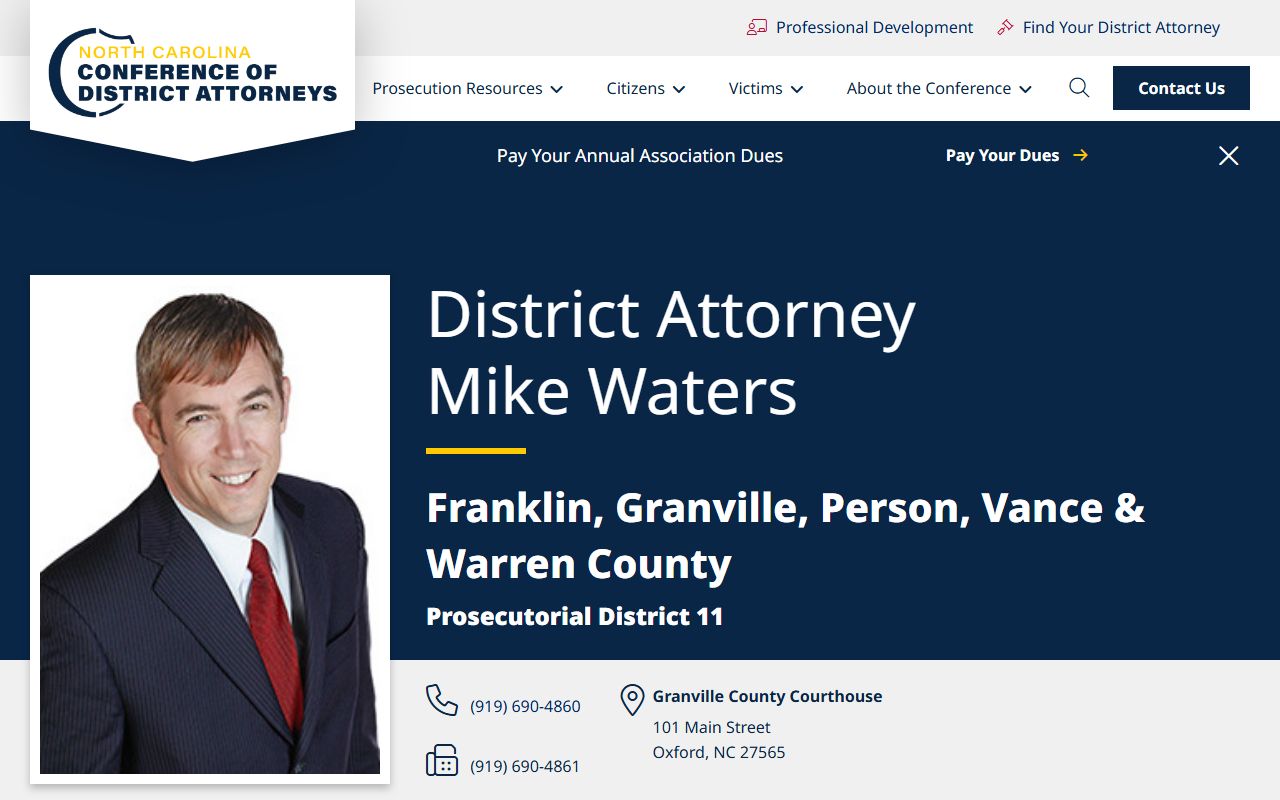
The DA page helps connect Vance County criminal court records to the office that prepares criminal dockets and prosecutes charges.
The NCIDS Vance County page explains appointed counsel resources for criminal defendants in Vance County.
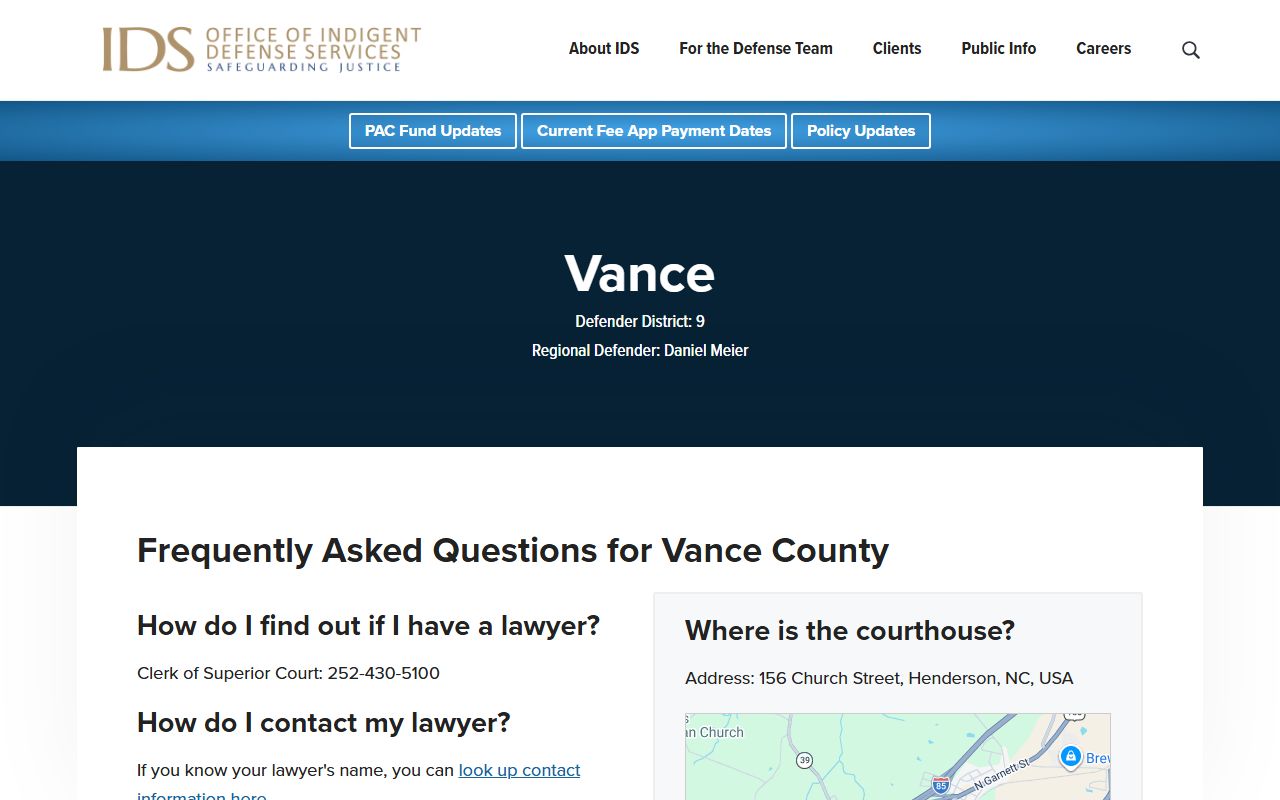
NCIDS context is useful when a criminal court record shows appointed counsel or when a defendant needs to confirm representation through the clerk.
Vance County Charges vs Convictions
A charge is an accusation filed in the criminal court process. A conviction is a result after a guilty plea, verdict, or judgment. Vance County criminal court records can show charges that were amended, reduced, dismissed, or resolved without conviction. A person may have a public case record even when one count was dismissed or another count ended differently. Read each count and disposition separately.
| Charge | Conviction | |
|---|---|---|
| Meaning | An allegation that starts or appears in a criminal case. | A court result that the defendant is guilty by plea, verdict, or judgment. |
| Timing | Early or amended stage of the case. | After plea, trial, or other final adjudication. |
| Record Risk | May later be dismissed, reduced, superseded, or expunged if eligible. | May carry sentence, fines, costs, restitution, probation, or collateral effects. |
| Where to Check | Charge list, process, docket entries, and amended filings. | Disposition, judgment, sentence, and clerk-certified search if needed. |
Read Vance Criminal Dispositions
The disposition is the outcome of a criminal case or charge. Common outcomes include guilty, not guilty, dismissed, deferred or conditional outcome where allowed, and appeal entries. A sentence can include jail, probation, fines, court costs, restitution, attorney fees, conditions, or payment schedules. Portal payment eligibility does not prove that every part of the sentence is complete. Use the clerk or official court order for exact terms.
Some Vance County criminal court records will also show continuances, motions, and appeal activity. A District Court misdemeanor or infraction can be appealed to Superior Court for trial de novo. A felony may show earlier District Court events and later Superior Court proceedings. Because one case can contain several counts, one charge may be dismissed while another results in conviction and sentence.
Vance County Sealed vs Expunged
Sealed and expunged criminal records are not ordinary public lookup records. Sealing restricts public access by law or court order. Expunction is a statutory process that removes or restricts eligible criminal records from public access. North Carolina expunction eligibility depends on offense type, prior record, waiting periods, sentence completion, and statutory exclusions. The Vance Clerk receives petitions for Vance County charges when filing in the county of the charge is required.
| Sealed | Expunged | |
|---|---|---|
| Public Visibility | Hidden or restricted from ordinary public inspection. | Removed or made confidential under the expunction order and statutes. |
| Legal Source | Statute, court order, juvenile law, mental health law, or other restriction. | North Carolina expunction statutes such as G.S. 15A-145.5 where applicable. |
| Access Afterward | May be available only to authorized persons or by court order. | Confidential under G.S. 15A-151, with limited statutory exceptions. |
| Vance Filing Point | Clerk or court order process where the case is located. | Petition generally filed with the Clerk of Superior Court where the charge occurred. |
G.S. 15A-145.5 is a major expunction eligibility statute for certain nonviolent misdemeanor and felony convictions.
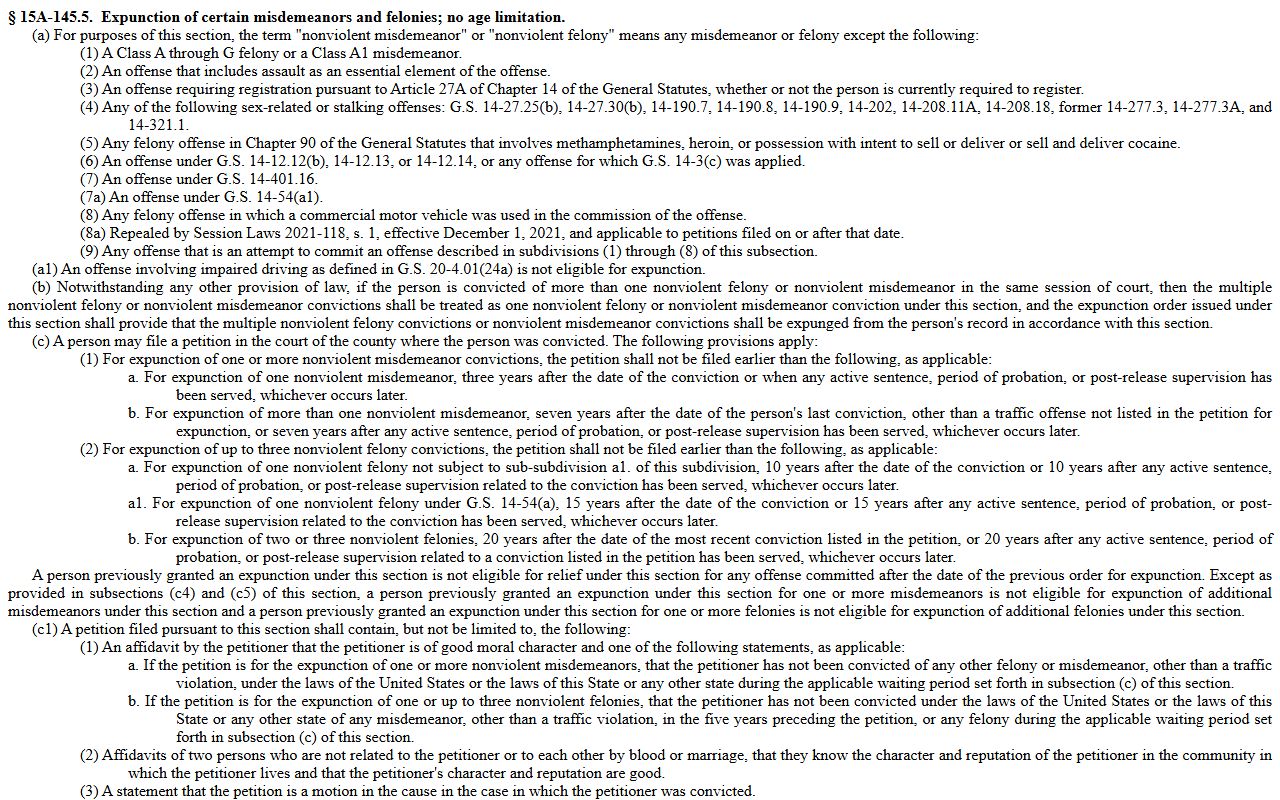
The eligibility statute helps explain why a Vance County criminal court record may be public for one person but later restricted for another.
G.S. 15A-151 governs confidentiality of expunction records after an expunction order.
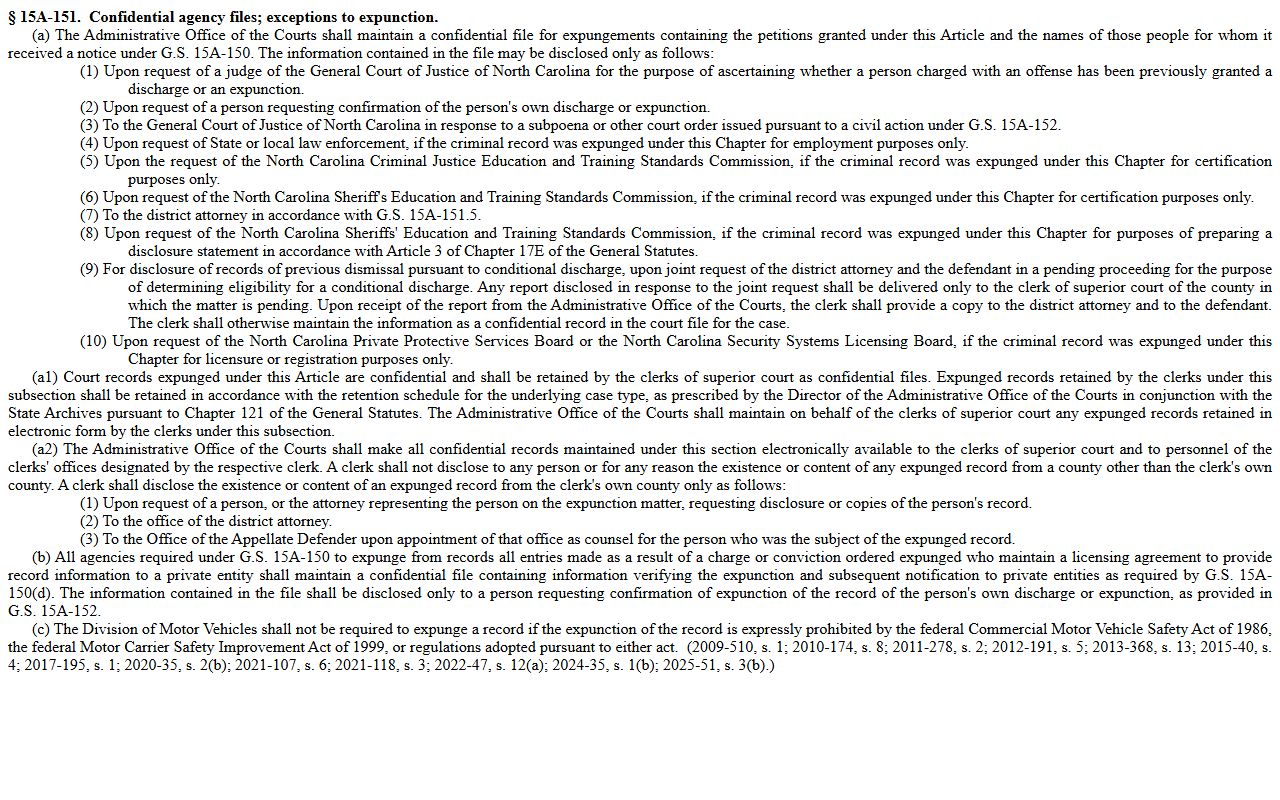
The confidentiality statute is the reason expunged Vance County criminal records should not be treated as ordinary public case results.
Public Access to Vance Criminal Records
Public access to criminal court records depends on the difference between court files and law enforcement files. A returned warrant, indictment, criminal summons, or court process can become part of a court record. A sheriff or police investigation file is different. G.S. 132-1.4 says criminal investigation and criminal intelligence records held by law enforcement are not public records, while certain returned warrants and court process are public unless sealed.
For local case files, use the Portal, public terminals, and the Vance Clerk of Superior Court. For statewide licensed data access, the Remote Public Access Program is available to approved users and is fee-based. For certified county criminal searches, use the clerk process. For custody status, use the Vance County Detention Center or state offender resources, not the criminal case file alone.
Important: Do not use casual online criminal case lookups for FCRA-regulated screening decisions.
Restricted Vance Criminal Court Records
Juvenile delinquency and undisciplined records are confidential under G.S. 7B-3000. Abuse, neglect, and dependency records are restricted under G.S. 7B-2901. Mental health proceedings, protected addresses, personal identifiers, sealed filings, and expunction material may be withheld or redacted. A Portal result may omit material that exists in a restricted court file.
When a criminal record is sealed, expunged, juvenile, or tied to confidential material, public access is limited. A person seeking access must rely on the statute, a court order, or authorized status. For Vance County criminal court records, the practical starting point is the Clerk of Superior Court at 156 Church Street, Suite 101, Henderson, NC 27536, phone (252) 430-5100.